
Let’s be honest. As a business owner you might have paid some agency for SEO who have stuffed some keywords to your website content and called this entire charade as “SEO”. This might have led to your website traffic dropping out of nowhere. Maybe someone told you to “just get more backlinks.” and after everything, you’re sitting here wondering why your competitor, who barely posts anything, is still showing up on Google’s first page while your perfectly keyword-loaded site is nowhere to be found.
Search engine optimization updates in 2026 have been brutal and frankly, long overdue. Google rolled out not one, not two, but three major core updates between February and May 2026. The March 2026 Core Update dropped on March 27, followed immediately by the March 2026 Spam Update, and then just six weeks later, the May 2026 Core Update launched on May 21, 2026. Back to back and no mercy. And every update had one job: kill the old playbook.
If you are a brand or a business looking to grow online you must understand these changes because this is a definite game-changer.
1. Keyword Stuffing Is Dead
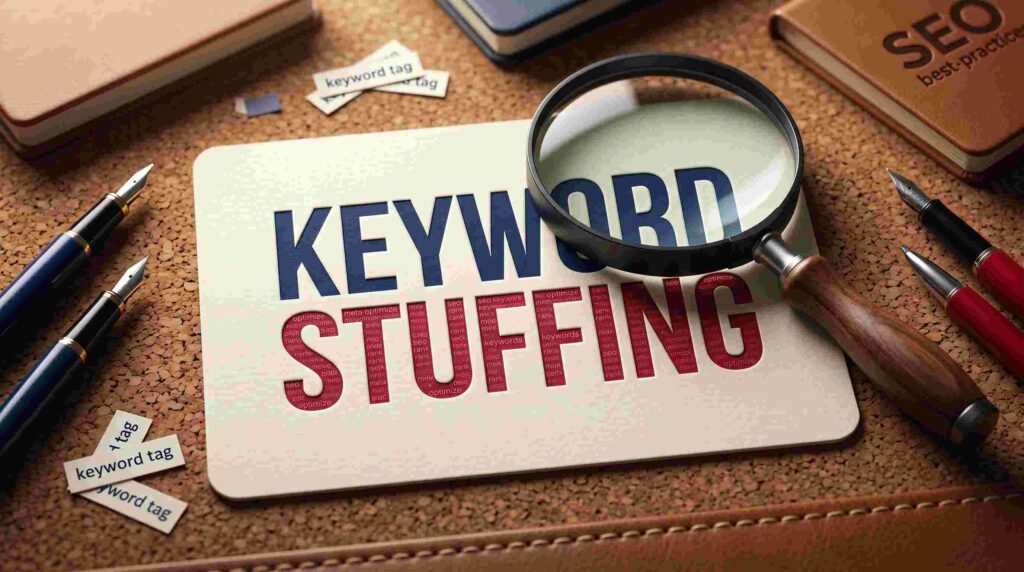
Remember the old trick? Write “best restaurant in Siliguri” eleven times in one blog and watch the rankings climb. That used to work once upon a time. Today, Google’s algorithm looks at that blog and essentially shrugs it off and in the worst case scenario, it gets flagged.
The search engine optimization updates from Google in 2026 have shifted the core evaluation system from keyword matching to intent understanding. Google no longer just looks at what words are on your page. It tries to figure out why a user searched for something and whether your content actually satisfies that intent. It also considers key metrics of your website like how long users who have been on your website, spent on your page before bouncing back to search results.
The March 2026 Spam Update, which completed on March 24–25 before the core update followed two days later, specifically targeted keyword manipulation and scaled content abuse. Sites using thin content padded with keyword repetitions and AI-generated articles that simply paraphrased existing content saw ranking drops; first from the spam cleanup, then from the quality re-evaluation.
What this means for your business in practical terms: a blog post that genuinely answers a question in clear, useful language will now outrank a 3,000-word keyword-stuffed article. Google’s internal quality systems now evaluate topical authority for search engine optimization updates. It rewards sites that cover a subject deeply and consistently over time rather than sites trying to rank for every possible high-volume keyword at once.
If you’ve been chasing volume, the 2026 core updates have officially closed that door. The change is not temporary. Businesses and brands, especially those working with the best digital marketing company in Siliguri or any serious SEO partner, need content strategies built around answering questions with expertise, not keyword density reports.
2. Backlinks Alone Cannot Save You Anymore
There was a time when getting 500 backlinks from guest post networks and directory submissions meant you were on your way to page one. That era has been fading for a while, but the Google 2026 search engine optimization updates have officially buried it. The February 2026 Core Update specifically widened the gap between editorially earned backlinks and low-quality link schemes. Sites that had invested heavily in guest post networks and bulk directory submissions saw returns diminish sharply. Source: Ariel Digital Marketing analysis of February 2026 Core Update.
But here is the more uncomfortable part of the search engine optimization updates. Even if your backlinks are decent, Google’s AI-powered search features are now changing the entire game of what “ranking” even means. As of 2026, 64.82% of all Google searches end without a single click to any website, meaning over six out of every ten people who search on Google never actually visit a page.
They get their answer from the SERP itself, from featured snippets, or from Google’s AI Overviews. Now factor this in: when an AI Overview appears in search results, organic click-through rates drop by an average of 38% on those queries, according to a controlled field study published by Search Engine Journal in April 2026. Source: Search Engine Journal, April 2026. For pure informational content, the situation is even more extreme — 83% of searches that trigger AI Overviews end without a click to any external page.
What this means is that traditional SEO, which was largely built around “rank on page one and traffic will come,” is now an incomplete strategy. Ranking is no longer enough. You need to be cited inside AI Overviews, inside featured snippets, inside People Also Ask boxes. You need Google to trust you as a source of accurate, authoritative information; not just a page with good backlinks. This is where Google’s E-E-A-T framework (Experience, Expertise, Authority, Trust) becomes absolutely central.
Sites with strong E-E-A-T signals saw 30–35% better ranking stability after the 2026 search engine optimization updates updates. And that kind of trust is built through original expertise, verifiable author credentials, specific data, and genuinely helpful content — not link building in bulk.
3. The “Publish More, Rank More” Strategy Has Collapsed

If you were publishing four blogs a week and thinking volume was your competitive edge; the May 2026 Core search engine optimization updates specifically came for that strategy. Google’s official description of the May 2026 update was a “regular update designed to better surface relevant, satisfying content from all types of sites.” What it actually did, in practice, was aggressively deprioritize what the SEO industry now calls “low-value content ecosystems”: websites that published mass-produced, repetitive AI text without adding original insight, real-world experience, or meaningful depth to a topic.
The search engine optimization updates of 2026 have made topical authority the new currency of SEO. This means Google now rewards sites that cover fewer topics but cover them with genuine depth and consistency. A website that publishes 10 deeply researched, experience-backed articles on one niche subject will outperform a website that publishes 200 generic articles across 40 different topics.
This is not a theory; it is the observable pattern across every SEO tracking tool and search community forum in the months following the May 2026 rollout. For local businesses, this is actually good news. You don’t need to compete with massive national websites on volume. You need to own your niche with specificity, local relevance, and real authority.
This is where smart digital marketing strategy makes all the difference. Whether you’re a startup, a hotel chain, a FMCG brand, or a real estate firm, the same principle applies. Partner with a team that understands content strategy through the lens of 2026’s updated ranking signals, not 2019’s playbook. Businesses in Tier-2 and Tier-3 cities are discovering this fast.
The best digital marketing company in Siliguri you work with in 2026 should be one that understands topical authority, AI Overview optimization, structured data, E-E-A-T compliance; not one that promises you “50 backlinks in 30 days.” Because Google search engine optimization updates have made it very clear: it is not the number of articles that will save you. It is the quality of experience and information behind each one.
What Should You Actually Do Now?
The core lesson from Google’s 2026 updates is this: SEO is not dead. Bad SEO is dead. The businesses that are seeing traffic stability and growth right now are the ones that built content with real human expertise, maintained a focused content niche, earned backlinks through genuine value, and structured their websites so that Google can extract, cite, and trust their information for AI-powered answers.
The search engine optimization updates of 2026 are not the last updates Google will roll out. If the pattern holds — and it always does — the next round will push the quality bar even higher. The brands that adapt now will be the ones that don’t need to “recover” from the next core update, because they will have built their online presence on signals that Google consistently rewards regardless of algorithm changes: real expertise, genuine helpfulness, and content that treats its readers like intelligent human beings.
That, in 2026, is what good SEO looks like. And honestly? It’s what it should have always looked like.
FAQs
Q: Did Google’s 2026 Core search engine optimization updates penalise all AI-generated content?
No. Google’s stance is that it is against low-quality, unhelpful AI content, not AI writing itself. Content that is AI-assisted but adds genuine expertise and original perspective is not penalised.
Q: How long does it take to recover after a Google Core Update ranking drop?
Google has stated that significant content improvements can be recognised between core updates; meaning recovery does not have to wait for the next major rollout. However, recovery requires substantive content improvement, not just technical fixes.
Q: Is local SEO still effective after the 2026 updates?
Yes. Local SEO remains one of the strongest growth channels in the search engine optimization updates. Google Business Profile optimization, local citations, and location-specific content continue to drive strong results, especially for businesses in Tier-2 and Tier-3 cities.